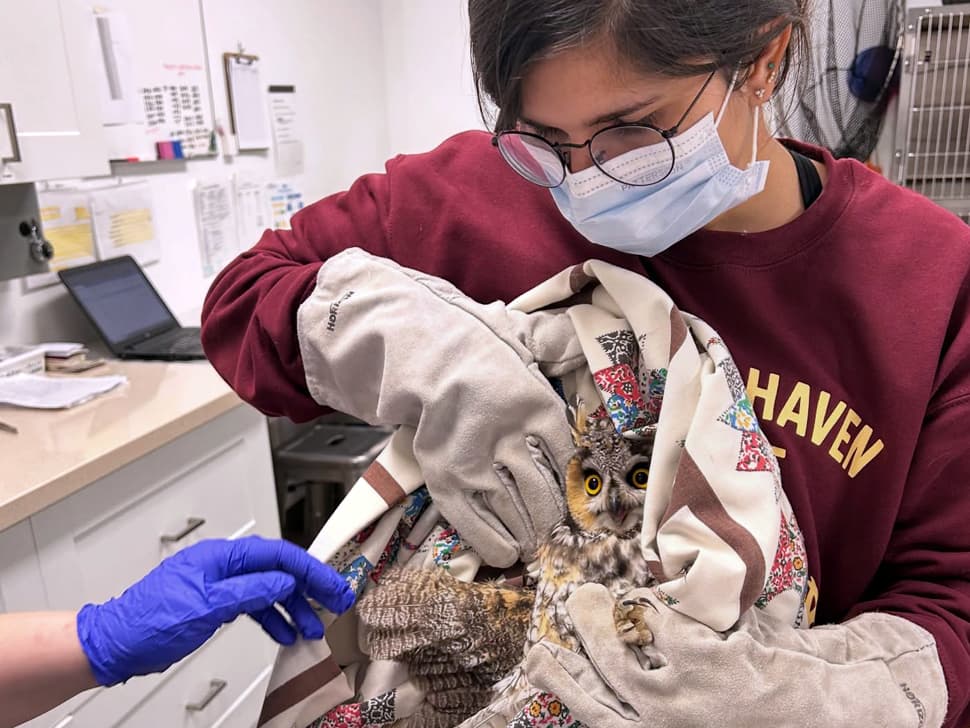
The Manitoba government is providing $650,000 to support major capital improvements at Wildlife Haven Rehabilitation Centre, a move aimed at strengthening the province's wildlife rehabilitation capacity as demand for services reaches record levels.
Premier Wab Kinew announced the funding Thursday, describing Wildlife Haven as a critical partner in caring for injured, sick and orphaned wildlife across Manitoba.
“Wildlife Haven rehabilitates injured, sick and orphaned wildlife so they can return to the wild, and we’re supporting them in this important work,” said Kinew. “These upgrades to the centre will help support long-term sustainability and our shared stewardship of Manitoba’s wildlife.”
The investment will fund repairs to the centre's main building and raptor enclosures, safety upgrades, a modernized contact centre, and two new outdoor enclosures for aquatic mammals and waterfowl.
Related Stories:
- Rare Northern Hawk Owl from Richer recovering after being hit by vehicle
- Don’t feed the ducks: bread’s bad news for birds
Funding comes at a critical time
The announcement comes as Wildlife Haven prepares for increased demand following news that Prairie Wildlife Rehabilitation Centre is entering its final operating season. Wildlife Haven says patient admissions have already increased by 60 per cent compared to the same period last year and expects additional pressure as Manitoba's only remaining multi-species wildlife rehabilitation centre.
Wildlife Haven currently admits more than 3,000 sick, injured and orphaned wild animals annually and responds to more than 35,000 public calls through its wildlife hotline.
“We’re grateful for the opportunity to improve our services and campus thanks to this support,” said Zoé Nakata, executive director of Wildlife Haven Rehabilitation Centre. “We’re excited for the first step in working with the Manitoba government to continue protecting the wild animals of our beautiful province.”
Wildlife Haven continues rescue efforts
Nakata said the organization remains committed to providing professional rehabilitation and veterinary care for wildlife across Manitoba, but acknowledged growing pressures on staff, volunteers and resources.
“We are committed to being there for Manitoba’s wildlife, but the reality is that this increase in demand comes at a time when our resources are already stretched,” she said.
Wildlife Haven has cared for more than 55,000 animals since opening in 1984. Annual admissions have grown dramatically from approximately 200 animals in the 1980s to more than 3,000 today.
The organization also paid tribute to Prairie Wildlife Rehabilitation Centre and its founder, Lisa, for nearly two decades of service caring for Manitoba wildlife.
Continued care for wildlife
Wildlife Haven says it is working with government representatives, regulators and community partners to ensure wildlife continues to receive care during the transition. The organization is also encouraging Manitobans to support its work through donations, volunteering and wildlife transportation assistance.
The provincial government noted that the investment is part of a broader commitment to animal care infrastructure, including a previously announced $5-million investment in a new animal health centre at Assiniboine Park Zoo.
Kinew also highlighted Wildlife Haven's collaboration with Indigenous communities, noting that incorporating traditional Indigenous knowledge into wildlife rehabilitation strengthens animal care practices, supports culturally informed release methods and enhances wildlife stewardship across Manitoba.