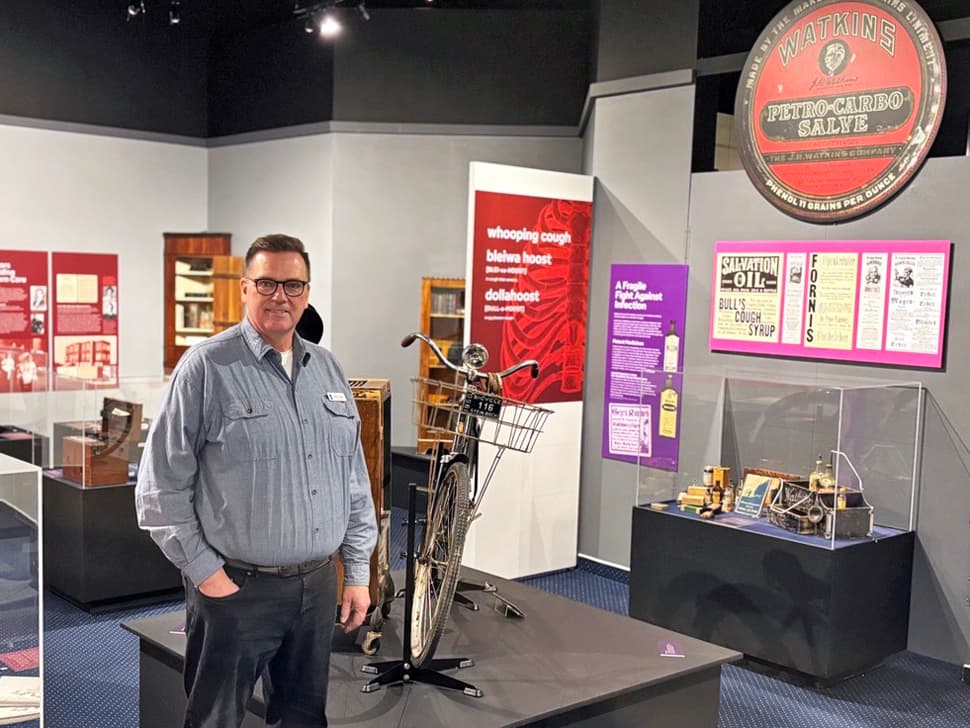
A new exhibit at the Mennonite Heritage Village museum in Steinbach is giving visitors a fascinating look at how Mennonites experienced medicine, health care and healing practices from the early 1800s through 1950.
The exhibit, located in the Gerhard Ens Gallery, officially opened on May 22 at the MHV's Annual Gala evening, and has already been generating conversations among visitors.
Senior Curator at the museum, Garth Doerksen, says seeing the completed exhibit after months of planning and preparation has been rewarding.
"It's been a lot of work, taking a long time to put it up, but it's so rewarding to see it in its final form here," said Doerksen.
The exhibit explores Mennonite medical history from Imperial Russia to Manitoba, covering topics ranging from herbal remedies and midwives to epidemics, hospitals, medical screenings for immigration and medical pioneers.
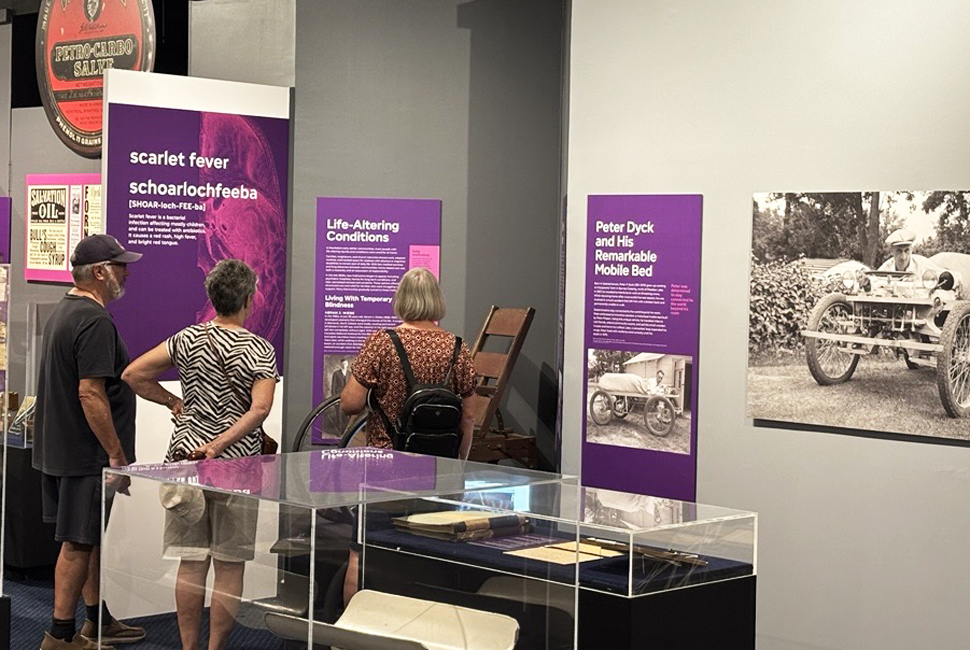
Visitors will find historical photographs, personal letters, medical instruments, recipe books, artifacts and personal stories that help illustrate how Mennonites navigated illness, health care and changing medical practices over generations.
Team effort behind the display
Doerksen credits a large group of researchers, volunteers and staff members for helping bring the exhibit together.
"It takes a lot of people in terms of all the research," he said.
Among those he recognized were Dr. Glenn Klassen, Ed Krahn, Mennonite Heritage Archives archivist Conrad Stoesz and Ernie Braun, who handled Low German and High German translations.
Doerksen also praised volunteer Doug Kaetler, whose carpentry and electrical work helped transform the gallery space.
"We actually added more lights to the gallery above, and then he also created all of the supports for the various items that needed that for this exhibit," said Doerksen.
He also acknowledged Assistant Curator Graeme Unrau for his contributions throughout the project.
Personal stories capturing visitors' attention
While the exhibit contains plenty of historical information, Doerksen says the personal stories are what many visitors connect with most.
"I've included a lot of stories in this exhibit, so it's not just facts about medicine and the history of it, but how it affected actual real people and the stories that go with the facts," he said.
Since the gallery's opening, he has overheard visitors discussing some of the emotional and surprising stories featured throughout the gallery.
"You hear people reading them and then talking to each other and, 'Wow, can you believe this?'"
Many of those stories deal with difficult realities, including infant mortality, disease outbreaks and families separated by illness during immigration to Canada.
One section tells the heartbreaking story of triplets who died shortly after birth despite efforts to keep them warm near a hearth. Another explores cholera outbreaks in Ukraine and the practical measures Mennonite communities took to protect themselves.
The exhibit also highlights how Mennonites embraced medical advancements, including smallpox vaccinations, while maintaining traditional healing practices.
Artifacts with remarkable histories
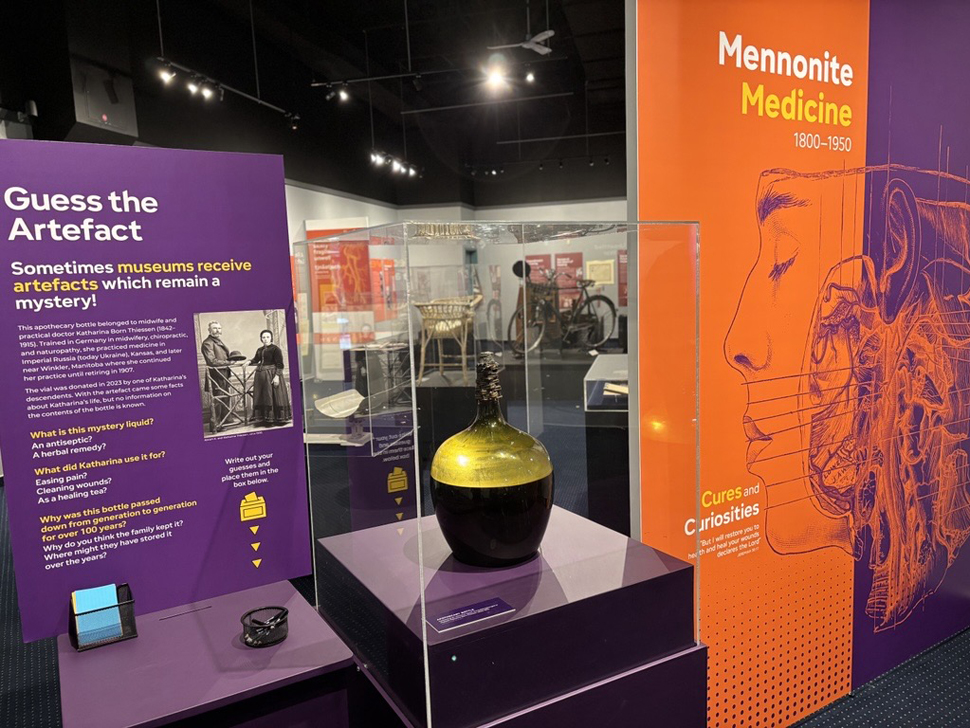
Among the many artifacts on display is a large brown crock containing an unidentified liquid that once belonged to midwife Katharina Born-Thiessen.
Interestingly, the vessel has been preserved by one family for more than a century.
Another unique artifact is a harp that travelled from Russia during the Russian Revolution. According to the story attached to the instrument, its owner reportedly saved his life by playing music for armed bandits who had mistaken the harp case for a weapon.
The exhibit also features stories of doctors, nurses, chiropractors, midwives and even a veterinarian from Niverville who reportedly treated both animals and people.
Visitors can also learn historical Low German medical terms, including "Trachmoalka," meaning chiropractor or bonesetter.
Interactive mystery invites visitor participation
One of the first things visitors encounter is an apothecary bottle that once belonged to midwife Katharina Thiessen.
The contents remain unknown.
"The very first thing a person sees when they come into the gallery is this apothecary bottle where we don't know what the contents are," said Doerksen.
Visitors are invited to write down their own theories about what may be inside and how it may have been used. Their answers will be displayed in the gallery throughout the exhibit's run.
Hoping to spark conversations
Doerksen says one of his biggest goals is for visitors to leave with a greater understanding of both medical history and the human stories behind it.
"The exhibit shows the growth and changes in the medical system and how Mennonites interacted with the system and with medications and medicine," he said.
He has already heard visitors sharing memories of grandparents, home remedies and personal experiences with health care after touring the exhibit.
"I hear those stories coming out as well, which again, if we can spark those kinds of conversations and interest and intrigue, that's a wonderful addition for this exhibit."
The exhibit is open daily from 9 a.m. to 5 p.m. during MHV's summer season. Doerksen says visitors can spend anywhere from a few minutes getting an overview to several hours reading the detailed stories and examining the artifacts.
"It's really for all generations," he said. "There are a lot of artifacts to take a look at. I think kids certainly would find this interesting as well."
The exhibit will remain on display at Mennonite Heritage Village for the coming year.
]]>