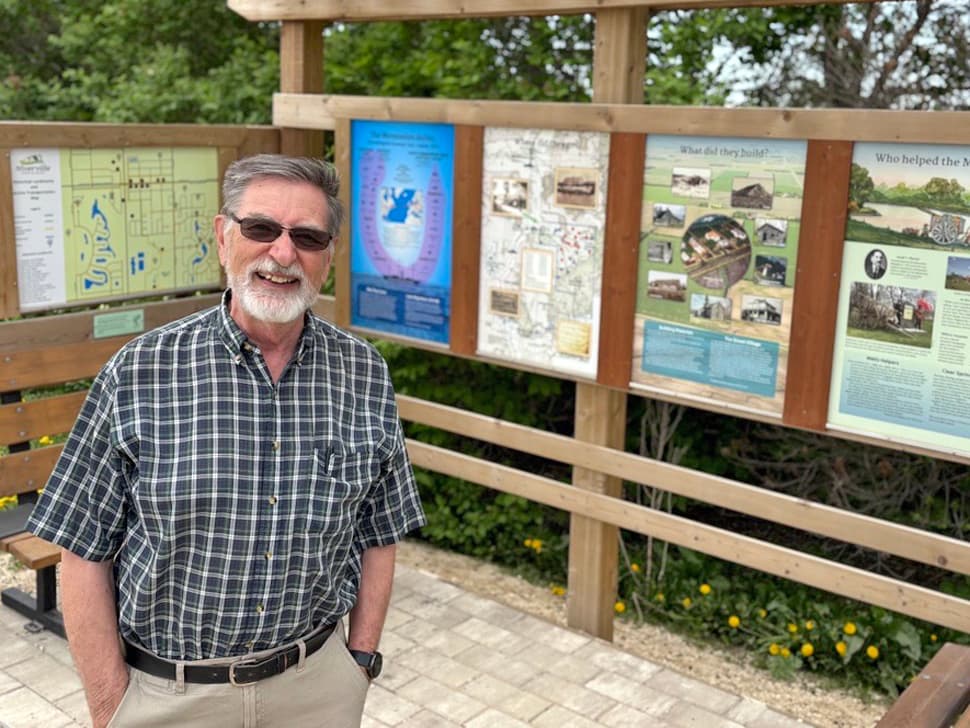
A new historical plaque will be unveiled in Niverville on Saturday, June 6, as residents gather to celebrate Manitoba Trails Day and recognize the community's unique place in Manitoba's transportation and settlement history.
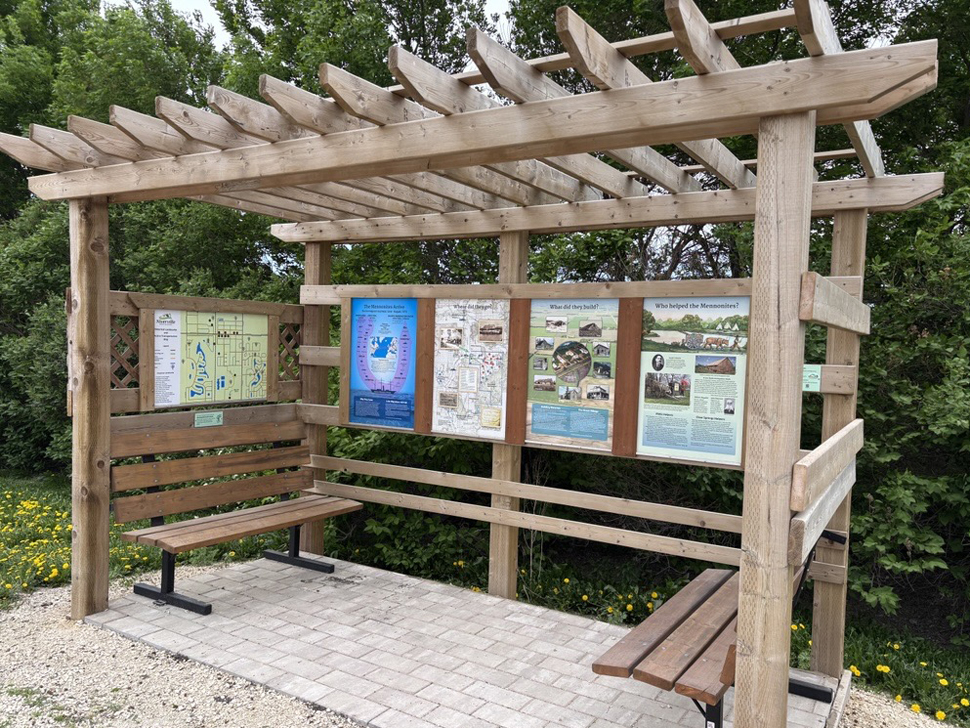
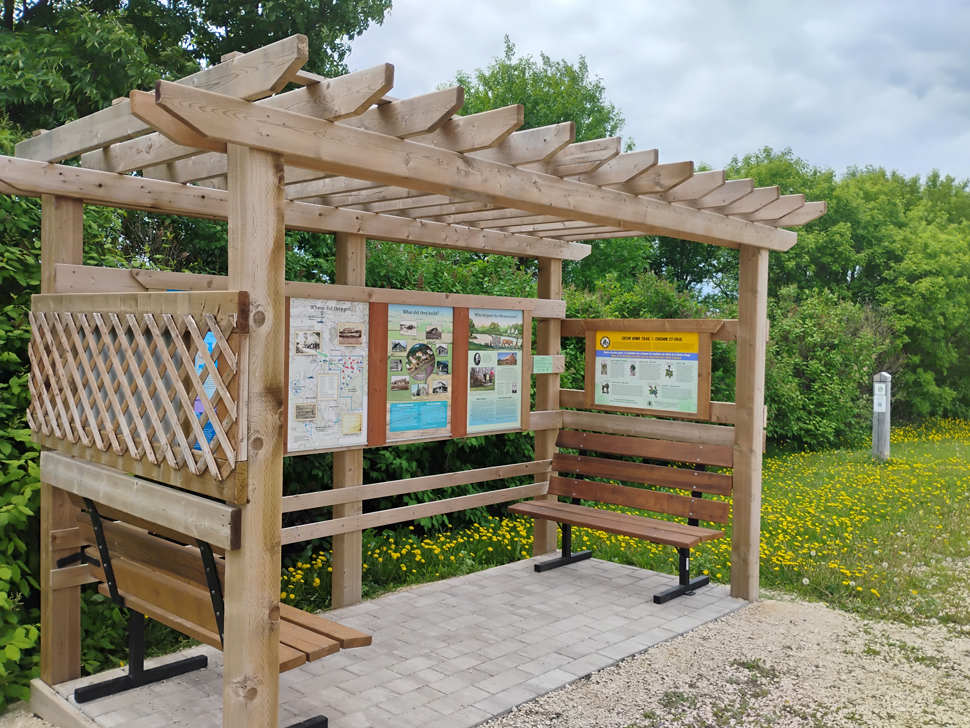
The ceremony will take place at the historical kiosk and pergola near Hespeler Park, where visitors can already explore a series of interpretive panels detailing the arrival and early experiences of Mennonite settlers in southeastern Manitoba.
According to local historian Ernie Braun, the event is about much more than a single plaque.
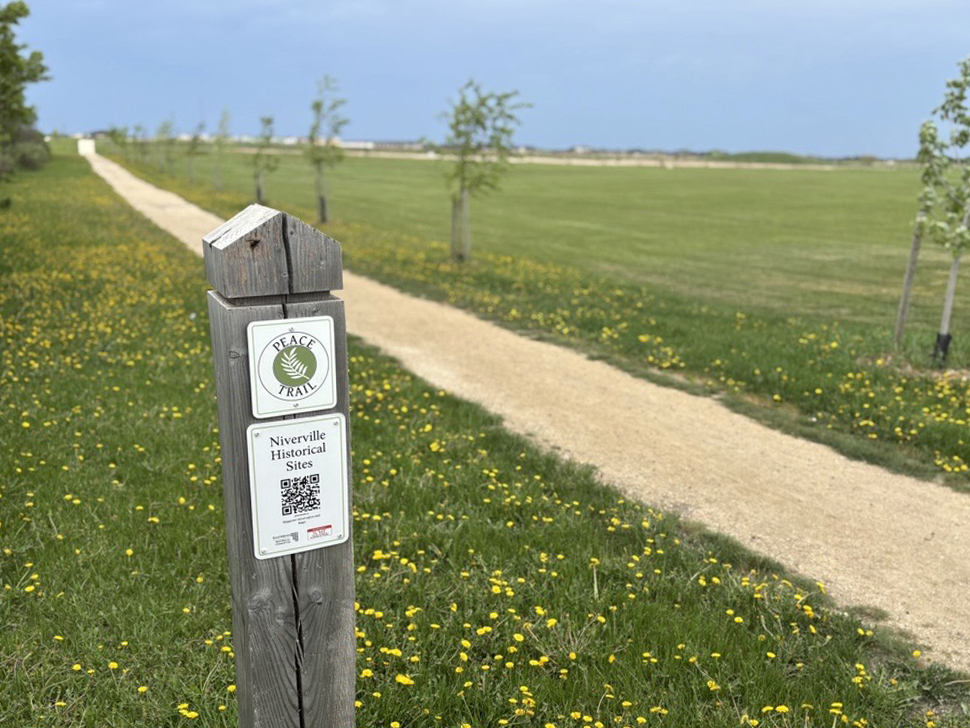
"This kiosk is part of the Peace Trail, which comes along here, goes out that way to the Shantz sheds (east of the kiosk) and all the way down to the Dirk Willems memorial at the Mennonite Heritage Village," Braun explained. "We're doing the unveiling here, and we're doing it on Manitoba Trails Day very deliberately because this is about not only the Peace Trail, but about trails themselves."
Where the trails meet
The new plaque focuses on the historic Crow Wing Trail, a transportation route that played a critical role in connecting Manitoba with Minnesota during the mid-1800s.
Braun said the trail's roots go back even further.
"If you go back far enough, there was a trail that ran just over there (west of the kiosk), very probably centuries before Europeans ever came," he said. "It was an Indigenous trail through the bush all the way down into what is now Minnesota."
In 1844, Métis freighter Peter Garrioch widened that existing path to accommodate Red River carts, creating what became the Crow Wing Trail. For decades, it served as a major trade and transportation route between Fort Garry, near Winnipeg, and the start of the Crow Wing Trail in Minnesota.
When Mennonite immigrants arrived in Manitoba beginning in 1874, many travelled along routes that connected with the Crow Wing Trail near the immigration sheds east of present-day Niverville.
"Thousands of them walked through here with the guidance of Métis cart drivers, ended up at the sheds, which were also built by Métis men, and right behind the sheds is the original Crow Wing Trail," Braun said. "Again, all the trails meet here."
Related Stories:
- Cutting the ribbon on Niverville's Station Lands Heritage Park
- A replica Red River Cart makes its permanent home in Niverville
- Historical Mennonite Peace Trail being planned in southeastern Manitoba
- Cairn unveiling and dedication event takes place on Manitoba Day
The trail that helped create Niverville
Braun said Niverville owes its very existence to another important transportation corridor, the railway.
As the Pembina rail line was being built northward in the 1870s, construction crews established a major supply depot where the rail line crossed the Crow Wing Trail.
"That's why we have Niverville," Braun said. "Had that not happened, there would be no Niverville."
The location became a hub of activity as hundreds of railway workers and thousands of Mennonite immigrants passed through the area.
"In 1874, the population of this immediate area was 1,500 people," Braun noted. "Niverville didn't get to be that size until 1990 again."
Today, the historic crossroads has taken on new meaning as the Peace Trail, Crow Wing Trail, Trans-Canada Trail, and local trail systems all intersect in the community.
"Because the Crow Wing Trail has been joined with the Trans Canada Trail, and because Hespeler Park now has its own trail, we have a point where so many trails are meeting here," Braun said.
Telling the Mennonite story
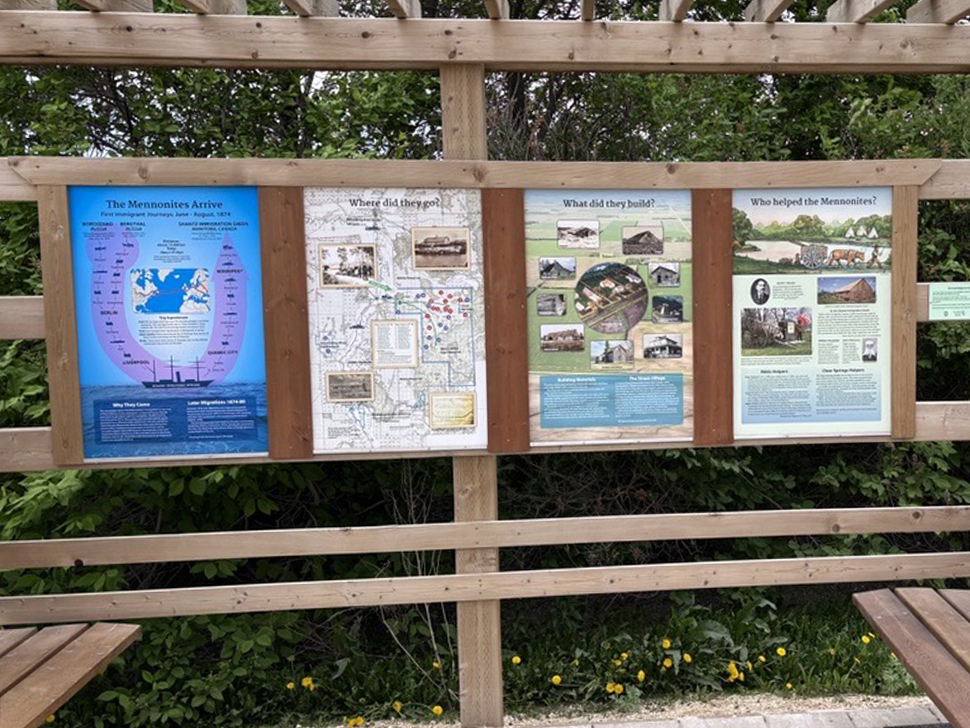
The kiosk itself features several interpretive panels that trace the story of Mennonite settlement in southeastern Manitoba.
The first panels focus on the arrival of Mennonite immigrants in 1874 and 1875, documenting their journey from Europe, the ships they travelled on, and where they settled after arriving in Manitoba.
Additional panels explain how settlers established villages throughout the East Reserve, eventually creating nearly 60 communities by the mid-1880s.
Braun said the displays also highlight the unique "street village" or Strassendorf design that characterized many Mennonite settlements.
"It's a medieval concept with long, narrow lots," he explained. "Actually, in some ways remarkably similar to the river lots of the Métis."
Other panels showcase the evolution of Mennonite homes, from simple sod and log structures to larger frame houses and elaborate two-storey homes as communities became more prosperous.
Recognizing those who helped
One of the final kiosk panels focuses on the many people who helped Mennonite immigrants make the transition to life in Manitoba.
"We didn't get here all by ourselves. We had help all along the way," Braun said.
He pointed to support from people in Europe, Mennonite communities in Ontario, and especially the Métis people already living in the region.
"Without them, how would we even have managed?" Braun said. "They knew the territory, they knew the land, they knew the climate, they had the horses, they had the oxen, they had the equipment and the skills."
Community invited to attend the ceremony
Saturday's unveiling is expected to include local leaders, historians and community representatives. Niverville Councillor Meghan Beasant will speak on behalf of the town, while Manitoba Historical Society president Gordon Goldsborough is also expected to attend.
The event will feature music, prayer and remarks from several guests connected to Manitoba's trail and heritage communities.
Braun hopes residents will take the opportunity to learn more about the stories that helped shape Niverville.
"The history of Niverville is pivotal in so many different ways," he said. "This is the history of this place, and it intersects with so many other elements of the life that I have lived and that my people have lived with other peoples in the same area, lives intersecting a bit like the trails are intersecting here."
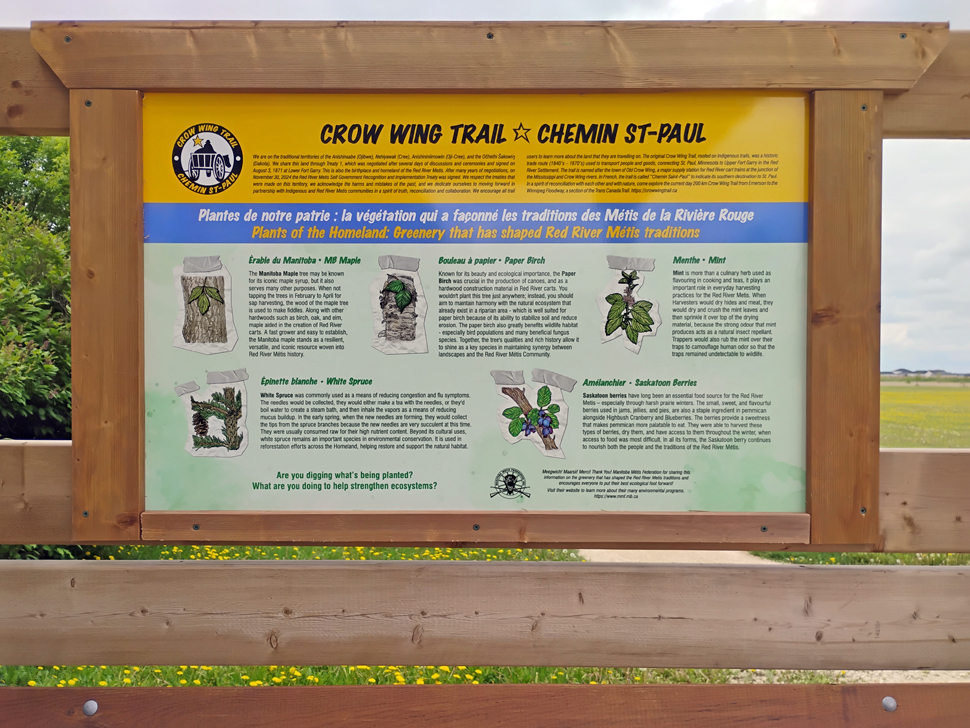
The ceremony and official unveiling of the plaque begins Saturday at 11 am at the kiosk site on the north parking lot of Hespeler Park. Braun encourages attendees to bring lawn chairs and join in celebrating Manitoba Trails Day and the many historic routes that helped build the region.
]]>