Six months following the announcement that a hyperscale AI data centre was in the works for Île-des Chênes (IDC), the provincial government is applying the brakes.
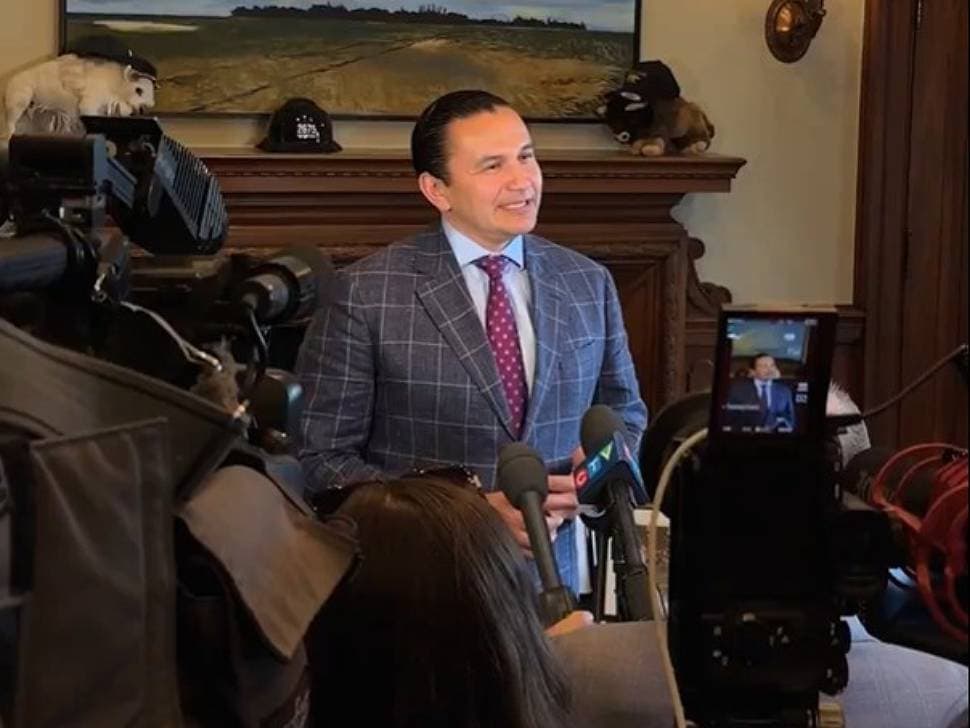
On June 4, Manitoba Premier Wab Kinew publicly declared his government’s intention to shut the door on development such as this - at least at the scale in which it was proposed.
“We are not going to move ahead with the data centre in Île-des Chênes because there’s a big threat to the environment and not much benefit to the economy,” Kinew said.
The Midwestern Project
In December 2025, a Nevada-based provider of GPU (graphics processing unit) infrastructure and AI cloud services, Jet.AI, released an announcement regarding a new initiative they called The Midwestern Project.
Partnering with Consensus Core Technologies Inc of Vancouver, Convergence Compute was created with a mandate to develop at least two major AI data centers in Canada.
The Midwestern Project was aimed for Manitoba, specifically 350 acres of field immediately abutting IDC’s north side.
Jet.AI described the project as “a large-scale development designed to meet rising North American demand for AI and high-density compute.” Already, they said, interest was coming in from hyperscale tenants looking for space in which to produce AI-related services on a massive scale.
We are saying no to a data centre in Île-des-Chênes because there are big threats to the environment and not much benefit to the economy.
— Wab Kinew (@WabKinew) June 4, 2026
Our message to any tech company out there… if you want to build technology with a thoughtful, human-centred approach that puts humanity… pic.twitter.com/ul0ITguMT6
Residents take action
In their early promotional material, Jet.AI described the IDC acreage as a Goldilocks site for data centre development. The land was available and the low-cost energy connections were abundant thanks to a nearby Manitoba Hydro substation and the TC Energy pipeline running beneath the ground just south.
Christie Little is an IDC resident and a vocal advocate for keeping AI data centres, such as the one proposed, out of close proximity to communities like IDC. Earlier this year, Little started a petition to stop the IDC data centre.
Within months, the online petition had reached areas far beyond IDC. To date, there are well over 13,000 signatures collected.
“I was completely shocked and I mean, a very happy shocked,” Little says of the premier’s announcement. “I was surprised that it had happened so quickly and that he had said no.”
Equally pleasing for Little was Kinew’s reference to the petition. She’s not surprised that the data centre was a concern that resonated with residents from around the entire province.
“As they’re starting to see what’s happening in the U.S., I think people in this province generally are starting to feel very nervous about data centres and so they’re feeling strongly about getting ahead of it, just like I did,” Little says.
Beyond the petition, Little and a group of neighbours had been busy writing letters to all levels of government. Every response to their correspondence had been ambiguous in nature up to this point.
Their concerns revolved mosly around noise pollution and negative environmental impacts.
For Little, specifically, she also worried over the potential for health-related issues caused by electromagnetic frequencies and infrasound, two biproducts that she says data centres have been known to emit.
“If they are going to come to our province, do it responsibly,” she says. “If this is something that our future is going to hold, we need to look at it as a whole and say, ‘How can we do this while protecting the community, protecting the environment, protecting the air and the water?’ And, if the answer is, ‘There’s no way,’ then maybe there’s no place for data centres in the province.”
Ritchot mayor weighs in
According to Ritchot mayor, Chris Ewen, his council has been receiving correspondence from concerned residents for a while already.
He’s also aware of the petition that’s been circulating throughout the region and has taken the time to meet with a number of concerned residents on the matter.
While it’s clear that Jet.AI has been actively working towards getting the approvals needed to push the project forward, permission requests have yet to fall on the desk of anyone at the RM office.
“In response to public questions surrounding the project, the RM corresponded with provincial officials to better understand the applicable provincial and federal regulatory requirements, approval processes, and oversight mechanisms that may apply to a project of this nature,” Ewen tells NivervilleOnline. “The RM respects the province's decision and appreciates the engagement of residents who took the time to share their feedback throughout the process.”
As for Kinew, the answer is clear. “I reject the idea that we have to be slaves to surveillance capitalism in order to participate in the modern economy. And so, the message to any company out there should be, ‘If you want to have a thoughtful, human-centered approach to technology, come to Manitoba because that’s what we’re interested in.”
]]>